The Opposite of Fear Isn't Courage: Why Clarity Changes Everything
What if the fear you're feeling isn't really fear at all?
Published September 1, 2026
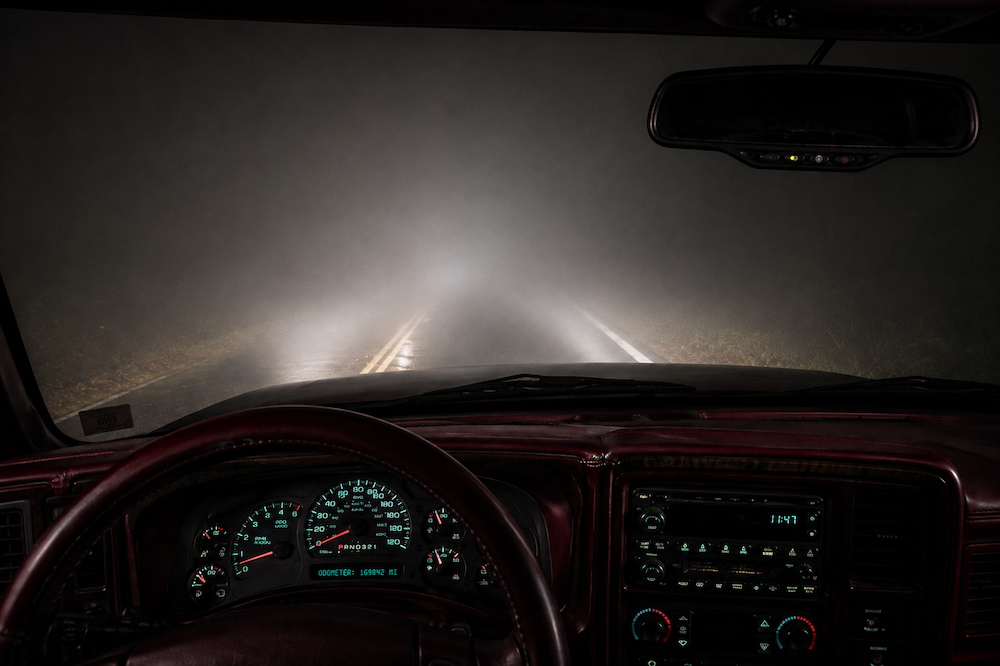
“When clarity disappears, our minds begin writing their own version of reality.” — Cheryl T Campbell
What Is the Opposite of Fear?
We've been taught that the opposite of fear is courage. I believed that for most of my life, and I suspect most people do. Whenever we're faced with an important decision, the advice is almost always the same: Be brave.
We're encouraged to be brave enough to start the business, have the difficult conversation, leave what no longer serves us, or take the next step even when we can't see where it leads. It's inspiring advice, and sometimes it's exactly what we need to hear.
Over the years, though, I began to wonder if we'd been trying to solve the wrong problem.
When I look back at the moments that changed my own life, I don't remember courage arriving first. I remember clarity. As I began to understand a situation more completely, fear seemed to loosen its grip. The next step didn't necessarily become easier, but it became clearer.
"I no longer believe the opposite of fear is courage. I believe the opposite of fear is clarity."
At first glance, that may sound like a small distinction. I don't think it is. I believe it changes the questions we ask ourselves.
Instead of asking, "How can I become more courageous?" we begin asking, "What would help me see more clearly?"
Those are very different questions.
The first assumes you need to become someone different before you can move forward. The second suggests that perhaps the path is already there... you just can't see it yet.
That single shift changed the way I understand fear, uncertainty, decision-making, and even personal transformation. It also caused me to look back on an experience from more than twenty years ago with completely different eyes.
At the time, I thought I was simply delivering a restored chair to a client. Years later, I realized that ordinary evening had quietly become one of the greatest teachers of my life.
"When clarity disappears, our minds begin writing their own version of reality."
Those stories are often built from assumptions, past experiences, imagined outcomes, and our very human desire to make sense of what we're experiencing. They can feel remarkably convincing, particularly when they're wrapped around a genuine emotion.
Think about how often you've caught yourself asking questions like:
What if I fail?
What if I make the wrong decision?
What if I'm not good enough?
What if everything falls apart?
The feelings those questions generate may be completely real. But the questions themselves don't describe reality. They describe possibilities.
That's an important distinction because clarity isn't about talking ourselves out of what we feel. It isn't about deciding that fear, anger, or hurt is somehow irrational because part of the story surrounding it may be uncertain. It's about allowing the feeling to be present while becoming curious about what we actually know.
Perhaps that's why uncertainty can feel so uncomfortable. Our minds don't like unanswered questions, so they rush to create answers, even when those answers are based more on interpretation than truth.
That realization made me see one particular evening in a completely different light. More than twenty years ago, while delivering a restored chair to a client, I found myself driving through one of the densest fogs I'd ever experienced. At the time, I thought it was simply an unpleasant drive home.
Years later, I realized it had quietly become the perfect metaphor for the way many of us move through life.
What the Fog Revealed
For years, I believed the most meaningful part of that story was the chair itself. I thought the lesson was about restoration, preserving memories, or the joy of giving two grandparents an unexpected gift. Those were certainly beautiful parts of the experience, but they weren't the lesson that stayed with me. The real lesson was waiting somewhere else. It had been hidden in the drive home all along.
I rarely thought about that evening again until I was reading Kevin Trudeau's newest book more than twenty years later. One particular passage caused me to pause, close the book, and quietly reflect. Almost instantly, I found myself back behind the wheel of my truck, driving through the Connecticut countryside, surrounded by fog.
The book wasn't about upholstery. It wasn't about furniture. It wasn't even about driving. Yet something about those pages unlocked a realization that had been quietly waiting for decades. For the first time, I understood why that drive had remained so vivid in my memory.
As I replayed the experience, I realized something remarkable. When the fog lifted, I hadn't suddenly become courageous. I wasn't a better driver than I had been moments earlier, and the road itself hadn't become any safer. Nothing about the external situation had changed. The only thing that changed was what I could see.
"The road was never gone. The fog simply prevented me from seeing it."
The moment clarity returned, my relationship with the fear changed. I didn't have to convince myself to keep driving, repeat affirmations, or somehow manufacture courage. I could simply respond to what was actually in front of me because the next step had become visible again.
That realization completely changed the way I think about fear. Perhaps fear isn't always asking us to become braver. Perhaps sometimes it's asking us to pay attention long enough to understand what is actually happening.
The Stories We Create
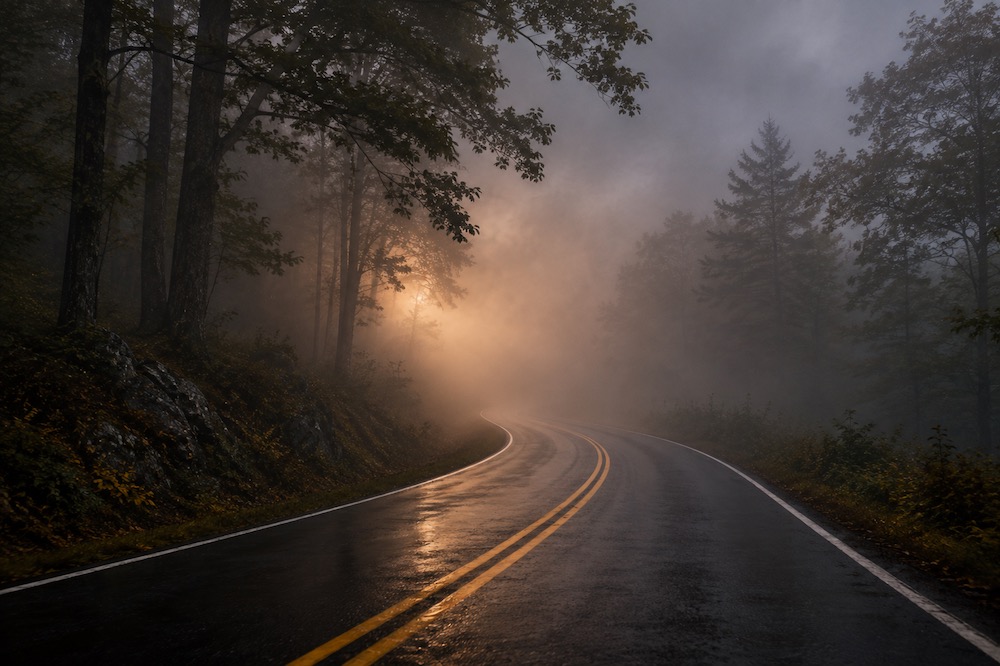
Once I understood what the fog had taught me, I began noticing the same pattern everywhere. It wasn't unique to that drive through the Connecticut countryside. It was happening in everyday life, often without me even realizing it.
When uncertainty enters our lives, our minds have an extraordinary ability to fill in the missing pieces. We begin asking questions that have no immediate answers. What if I fail? What if I make the wrong decision? What if everything falls apart? What if I'm not enough?
There's nothing wrong with asking questions. In fact, curiosity is one of our greatest strengths. The problem begins when our minds mistake possibilities for probabilities, and probabilities for certainty. Before long, we've constructed an entire future based on assumptions rather than facts.
Looking back at that evening, I realized that none of the things I feared had actually happened. I never drove into a ditch. Another vehicle didn't suddenly appear around a blind curve. I wasn't lost. The fear I felt was real, but much of the story surrounding that fear was being created by my mind because I couldn't clearly see the road.
"We often suffer more from the stories we create than the reality we face."
The more I reflected on that experience, the more I recognized the same pattern in other areas of life. A difficult conversation can become a story about rejection. A career change can become a story about failure. A health concern can become a story about the worst possible outcome. Yet that doesn't mean the emotions accompanying those experiences are somehow false or inappropriate. We may genuinely feel hurt, frightened, angry, or disappointed by what is happening.
The distinction is subtler than that. The feeling is part of our experience. The story is our interpretation of what the feeling means, why something happened, what someone else intended, or what will happen next. When those two become tangled together, it can become difficult to distinguish what we actually know from what we've assumed.
I don't believe our minds do this because they're broken. I think they're trying to protect us. Throughout human history, anticipating danger increased our chances of survival. The problem is that the same mechanism that helps us recognize genuine threats can also construct elaborate explanations for situations we don't yet fully understand.
"Clarity doesn't require me to bypass what I feel. It asks me to feel what is here without automatically turning it into a story.
That distinction has become increasingly important to me. Moving too quickly toward perspective can sometimes look like wisdom while quietly becoming another way of avoiding what we're actually experiencing. Telling ourselves to let it go may ultimately be exactly right, but letting go means something very different when we've first taken the time to understand what we're releasing.
Clarity doesn't ask us to suppress the emotion. It asks us to make room for it without automatically accepting every conclusion our minds build around it.
Transformation Begins with Clarity
For much of my life, I believed transformation required courage. If I wanted my life to change, I assumed I simply had to push through fear, become stronger, and somehow force myself forward. There were certainly moments when perseverance mattered, but as I look back over the experiences that shaped my life, I no longer believe courage was the beginning of the journey.
Clarity was.
Every meaningful change I've experienced began the moment I saw something differently. Sometimes that new perspective came through a conversation. Sometimes it came from a book, a life experience, or a quiet moment of reflection. The source was never the important part. What mattered was that once I understood something more clearly, my choices began to change naturally.
I wasn't forcing myself to become someone new. I was responding to a deeper understanding of what had always been true. The action felt different, not necessarily because the circumstances had changed, but because my relationship to those circumstances had changed.
That's why I now believe we've misunderstood the role fear plays in our lives. We often tell ourselves that we need more confidence before we can act. We convince ourselves that if we could just become more courageous, disciplined, or resilient, then we'd finally be ready to move forward. But what if we've been asking the wrong question all along?
What if lasting transformation doesn't begin by becoming a different person? What if it begins by seeing more clearly?
"Clarity doesn't ask you to become someone else. It reveals who you've been all along."
Think back to the drive through the fog. The road didn't change. My destination didn't change. I wasn't suddenly a better driver than I had been five minutes earlier. The only thing that changed was my ability to see what had been there all along. Once the fog lifted, I no longer had to struggle with whether I should keep moving. I could respond to the road that was actually in front of me.
I've come to believe that many of the turning points in our lives happen the same way. We can spend months or even years believing we're stuck when what we really need is a clearer understanding of what we're experiencing. Sometimes that clarity reveals a next step. Sometimes it reveals that we're telling ourselves a story that isn't supported by what we actually know. And sometimes it confirms that something genuinely deserves our attention.
Perhaps transformation has never been about forcing ourselves through fear. Perhaps it's about becoming willing to experience what is present, see it as clearly as we can, and then choose what comes next.
Living with Greater Clarity
If clarity changes our relationship with fear, how do we cultivate it?
For many years, I would have answered that question by focusing on action. I would have encouraged you to push through discomfort, trust yourself more, and keep moving even when you felt uncertain. While there's value in each of those ideas, I now believe they begin one step too late.
Clarity rarely arrives because we force it. More often, it emerges because we create the conditions for it.
Think about the windshield of a car during a heavy rainstorm. You don't make the road appear by trying harder to see it. You clear the windshield. You slow down. You become more attentive. As your vision improves, you have more information with which to decide what to do next.
Our inner lives work much the same way. When our minds are filled with constant noise, imagined conversations, worst-case scenarios, and interpretations about what something means, it's difficult to distinguish truth from the stories we've been telling ourselves.
But creating clarity doesn't mean jumping over the emotional experience in order to reach a more peaceful perspective. Sometimes the first step toward clarity is simply acknowledging, I'm angry. I'm frightened. I'm hurt. I'm disappointed. Not judging the feeling. Not explaining it away. Not immediately trying to release it. Just recognizing what is actually here.
From there, we can begin to notice what accompanies the feeling. What story am I telling myself about what happened? What do I actually know? What am I assuming? What am I predicting? What am I carrying into this moment from something that happened before?
That process gives us a very different path through uncertainty:
Feel → Notice → Separate Story from Reality → Seek Clarity → Choose
The final word matters.
Choose.
Because clarity doesn't dictate a single response. Sometimes clarity leads us to let something go. Sometimes it asks us to have a conversation, change direction, establish a boundary, seek more information, or simply wait.
And sometimes clarity reveals something equally valuable: This matters, but it isn't mine to resolve right now.
"Clarity isn't something we chase. It's something we create space to receive."
I've discovered that some of the clearest decisions of my life didn't come while I was desperately searching for answers. They arrived when I stopped trying to force an outcome and became willing to see the situation as it truly was, including what I was genuinely feeling about it.
That doesn't mean every decision becomes easy. It doesn't mean uncertainty disappears overnight, and it certainly doesn't mean clarity always makes an uncomfortable situation comfortable. Sometimes seeing something clearly confirms a truth we would rather not face.
But clarity gives us something more useful than comfort.
It gives us a place from which to choose.

A Different Question
One of the simplest changes I've made in my own life has also been one of the most profound. Whenever I notice fear beginning to take over, I rarely ask myself, "How can I be more courageous?" anymore.
Instead, I ask a different question:
What would help me see this more clearly?
That single question changes everything that follows. Instead of trying to overpower fear or dismiss whatever I'm feeling, I become curious about the experience itself. What am I feeling? Is there information I'm missing? Am I making assumptions about the future? Have I accepted a story as truth without ever questioning it? Is something from my past influencing the way I'm interpreting what is happening now?
I've discovered that clarity often arrives in unexpected ways. Sometimes it's found in a conversation with someone who offers a perspective I hadn't considered. Sometimes it's hidden within the pages of a book. Sometimes it comes while walking in nature, sitting quietly with a cup of coffee, or allowing myself a few moments of silence instead of rushing to solve the problem.
The answer isn't always immediate, and perhaps it doesn't need to be. As I drove through the fog that evening, the road didn't suddenly become clear because I wished it would. I simply kept responding to what I could actually see until more of the road became visible.
"Clarity rarely arrives all at once. More often, it unfolds one insight at a time."
Looking back, I've realized that some of the greatest turning points in my life weren't dramatic moments of courage. They were quiet moments of understanding. A single insight changed the way I saw a situation, and that new perspective naturally changed the choices I made afterward.
Perhaps that's why I no longer believe the opposite of fear is courage. Courage certainly has its place, and there are moments in life that genuinely call for it. But I've found that courage is often the result of clarity, not its replacement.
Sometimes the greatest gift we can give ourselves isn't more determination. It's enough space to feel what we're feeling, question the story we've created around it, and see what is actually true.
An Invitation
If there's one thing I hope you take away from this story, it isn't that fear is bad or that courage is unnecessary. Fear has a purpose. It can alert us to genuine danger, encourage us to pay attention, and tell us that something matters. Courage also has its place. There are moments in life that require us to step forward even when we don't know exactly what will happen next.
But I wonder how many of the fears we carry every day aren't really asking us to become more courageous. I wonder how many are asking us to become more curious about what we're experiencing.
The next time you find yourself overwhelmed by a decision, resisting a change, angry about an interaction, or imagining every possible way something could go wrong, resist the temptation to immediately dismiss the feeling or force yourself toward a better perspective.
Start with what is here.
Allow yourself to feel it. Notice the story surrounding it. Separate what you actually know from what you've assumed, interpreted, predicted, or carried forward from somewhere else.
Then ask:
What am I unable to see clearly right now?
You may discover that part of what you're experiencing is uncertainty. You may realize you've been reacting to a story rather than to what you actually know. You may discover that your feelings are pointing toward something that genuinely needs your attention.
Or you may recognize that you simply don't have enough information yet.
Clarity doesn't always resolve the situation. Sometimes it reveals what is actually true, what story we've added, what deserves our attention, and what isn't ours to resolve right now.
That, too, is clarity.
Looking back, I no longer remember that evening simply as the night I drove through a dangerous fog. I remember it as the night life quietly handed me a lesson that I wouldn't fully understand for another twenty years.
"Perhaps the opposite of fear isn't courage. Perhaps it's seeing clearly enough to choose what comes next."
Continue the Journey
If this idea resonated with you, I invite you to carry it with you over the next few days, not as another belief to adopt, but as something to explore in your own life.
Notice the moments when fear, anger, hurt, or uncertainty begins to surface. Rather than immediately trying to push through the feeling, rise above it, or let it go, give yourself permission to notice it first. Ask yourself what you're genuinely experiencing and what story your mind may already be constructing around it.
You don't have to answer every question immediately. Simply separating what you feel from what you know, and what you know from what you're assuming, begins to create space.
Over time, you may notice something subtle but powerful. Decisions become less about forcing yourself to act and more about understanding what is actually in front of you. Sometimes that understanding brings relief. Sometimes it brings a difficult truth. Sometimes it simply tells you that you don't know yet.
All three can be forms of clarity.
That shift continues to shape the way I approach opportunities, challenges, relationships, and uncertain seasons in my own life. It hasn't removed every obstacle or uncomfortable emotion, nor would I expect it to. What it has changed is my willingness to stay present long enough to understand what an experience may be showing me before deciding what to do with it.
I've learned that clarity doesn't require certainty.
It requires honesty about what is here.
If you'd like to hear this story as it was originally shared, I've embedded the accompanying video below. While this article explores the ideas more deeply, the video captures the emotion of that evening and the moment this insight first came together.
After you've watched it, I encourage you to continue exploring the ideas behind The Fifth Principle. Each article builds upon the last, creating a framework for understanding ourselves, our decisions, and the way we move through life with greater awareness.
The journey begins with a different kind of question:
What would help me see more clearly today?
A Resource That Deepened My Thinking
Although the story you've just read comes entirely from my own life, the insight that finally connected all the pieces came while I was reading Kevin Trudeau's newest book.
Sometimes a single paragraph arrives at exactly the right moment. It doesn't give us a new life. It gives us a new perspective on the life we've already lived.
That's exactly what happened for me.
If this article resonated with you and you'd like to explore some of the ideas that helped spark this realization, I encourage you to take a look at Kevin's book. You may not arrive at the same conclusions I did, but I have a feeling it will encourage you to look at your own experiences through a different lens.
Some books give us information.
The best books help us recognize truths that have been quietly waiting within us all along.
The Physical Book
If you're like me and prefer having a book in your hands, you can order a printed copy.
The Electronic Version
If you prefer to begin digitally, you can access the electronic version at no cost.
Disclosure: These are affiliate links. If you choose to order through one of them, I may receive compensation at no additional cost to you.
Put This Principle Into Practice
Understanding an idea is one thing.
Living it is something else.
If you'd like to move beyond simply understanding this idea and begin experiencing it in your own life, I've created a Living Practice called Fear or Fog?
Fear or Fog? is designed to help you slow down long enough to notice what you're actually feeling, recognize the stories your mind may be creating around the experience, and separate what you genuinely know from what you've assumed, interpreted, or predicted.
Through guided reflection and practical exercises, you'll have an opportunity to move through the process yourself:
Feel → Notice → Separate Story from Reality → Seek Clarity → Choose
The goal isn't to talk yourself out of what you feel or rush toward a more comfortable perspective. It's to honor what you're experiencing while creating enough space to see what is actually true.
Sometimes that clarity will show you something that needs your attention. Sometimes it will reveal a story you're ready to release. Sometimes it will point toward a next step, a boundary, a conversation, or simply the need for more information. And sometimes it will help you recognize that something matters, but it isn't yours to resolve right now.
Fear or Fog? gives you a simple way to return to this practice whenever fear, uncertainty, anger, hurt, or overwhelm begins clouding your view.
Because insight is valuable.
Living it is life-changing.
Fear or Fog?
Finding Clarity When Life Feels Uncertain
A guided Living Practice · $17
Share this reflection:


✨ Feel free to wander back...